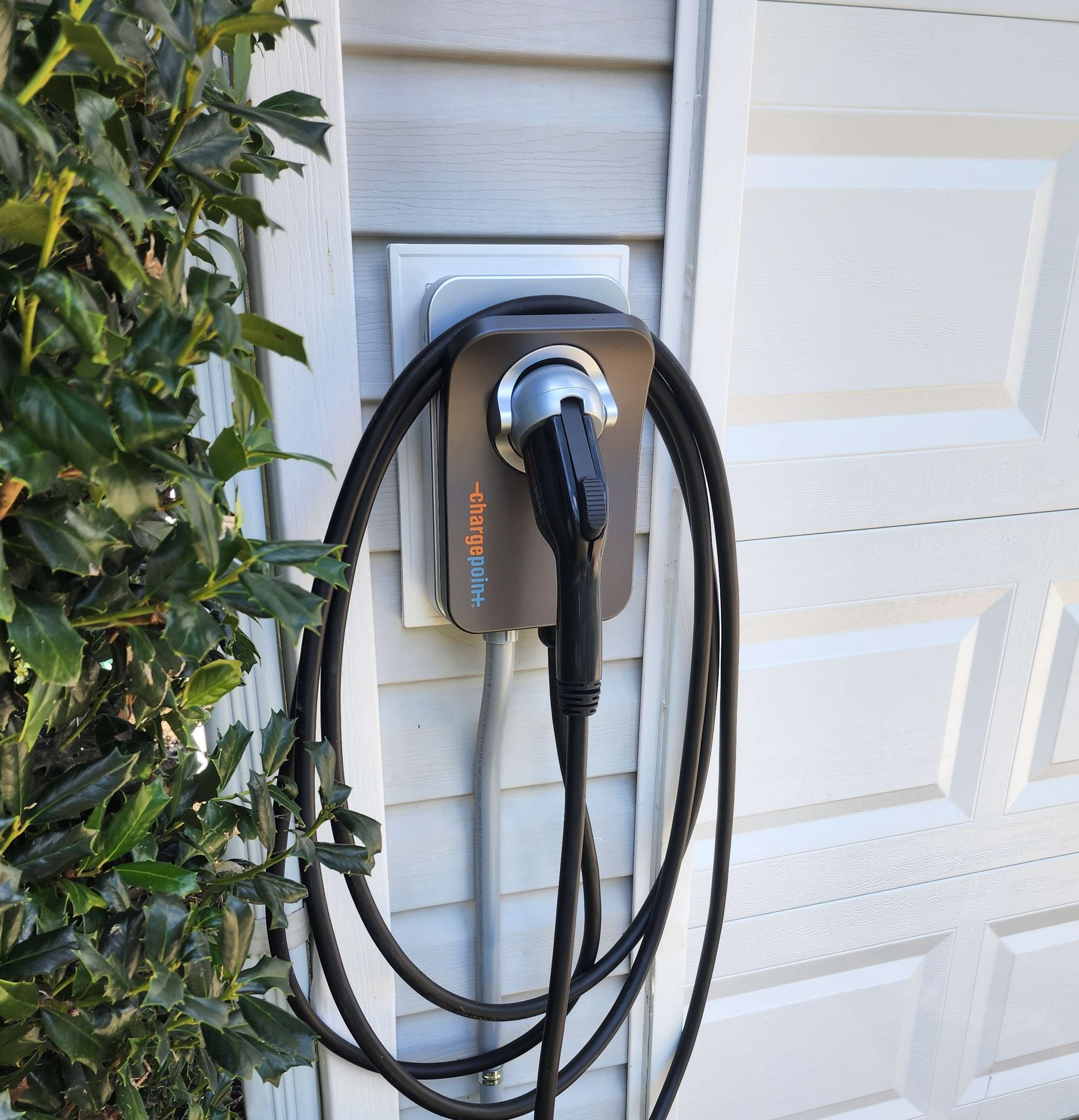
Car Charger Installation
We provide professional turn-key residential EV charger installations tailored to your home and your vehicle. From pulling the necessary permits to selecting the perfect charger, and upgrading your electrical panel, our electricians handle everything safely and efficiently.
Before we can install your EV Charger, we need to verify your existing panel’s capacity, and run a load calculation to ensure the existing service can handle a continuous 40 to 50 amp load.
Dedicated Circuit Installation: We will run the proper gauge wire and install a compatible breaker.
Wall mounting and set up.
Code compliant installation.
Permit filing and inspection coordination.
-
The cost of EV Charger installation typically ranges from $650 to $1200 depending on distance from the panel, whether you need a panel upgrade, and/or charger model.
-
It comes down to speed and the voltage required:
Level 1 uses a standard 120-volt household outlet (the same plug you use for a toaster). It is incredibly slow, adding only about 3 to 5 miles of range per hour of charging. A full charge can take 24+ hours.
Level 2 uses a heavy-duty 240-volt circuit. It charges 3x to 5x faster, adding roughly 25 to 45 miles of range per hour. This allows most EVs to go from empty to 100% comfortably overnight while you sleep.
-
Not necessarily, but we have to perform a load calculation first. Most modern homes have 200-amp main electrical service, which can usually accommodate a Level 2 charger without an issue. However, if your home has an older 100-amp panel—or if you have multiple high-draw electric appliances like a heat pump, hot tub, or electric stove—your panel might be near capacity. If your panel is maxed out, we can either install a subpanel, upgrade your main panel, or use a smart "load-shedding" device that dynamically pauses charging if your home's total electricity draw gets too high.
-
We strongly recommend hardwiring permanently mounted Level 2 chargers for home use. Hardwired chargers are safer, have fewer physical points of failure, are better rated for outdoor exposure, and can deliver higher charging speeds (up to 48 or 50 amps).
A 240V plug-in outlet maxes out at 40 amps of charging output, but it offers flexibility. If you move, you can easily unplug the charging unit and take it with you, leaving a functional 240V outlet behind.
FAQs