
Electrical Panel Tune Up
Our panel tune up involves inspecting for loose connections, signs of corrosion, or overheating, testing circuit breakers, and tightening any loose screws or terminals. We will inform you of any issues we find that need to be addressed. Regular panel tune ups ensure that your panel is meeting modern safety standards, prevents electrical issues, and extends the life of the electrical system in your home.
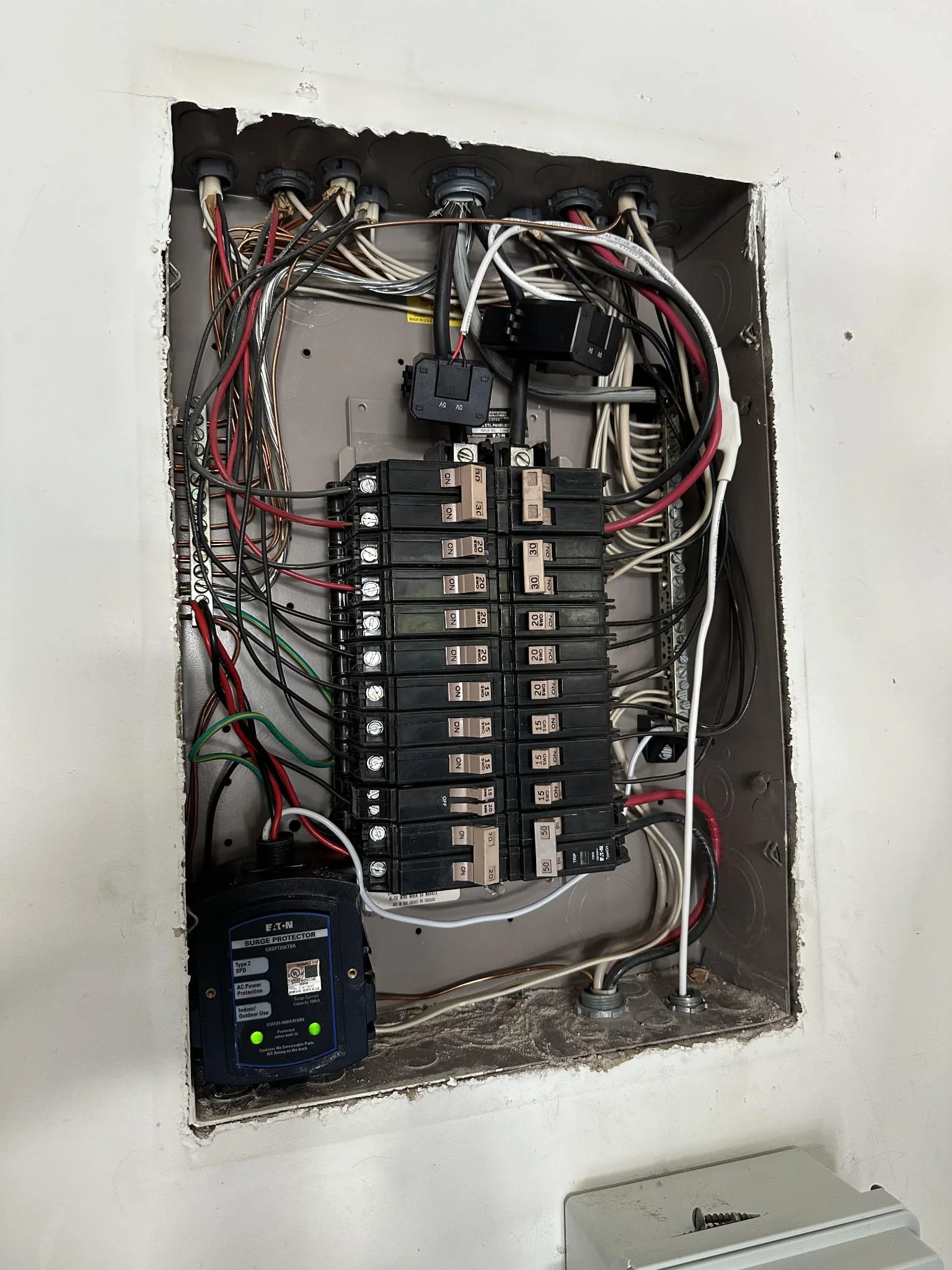
-
Think of a panel tune-up like an oil change and multi-point inspection for your car, but for your home’s electrical heart. The everyday flow of electricity causes minor vibrations, as well as heating and cooling of copper and aluminum wires. This causes connections to loosen over time. During a tune-up, a licensed electrician removes the panel cover to inspect internal components, check for hidden hot spots, clean out dust or corrosion, verify your grounding system, and tighten every terminal screw to exact manufacturer specifications.
-
We recommend having a professional panel tune-up and safety inspection performed once every 3 to 5 years for standard homes. However, you should schedule one sooner if your home is more than 25 years old, if you have recently added high-draw appliances (like a hot tub or EV charger), or if you notice your breakers humming or your lights flickering.
-
Yes, indirectly! When internal connections are loose or corroded, they create electrical resistance. This resistance forces your electrical system to work harder and draw more current to power your home, generating wasted heat inside your panel box. By cleaning the bus bars and tightening connections, electricity flows smoothly and efficiently. Furthermore, identifying a failing breaker early prevents it from damaging expensive connected appliances like your HVAC compressor or refrigerator.